


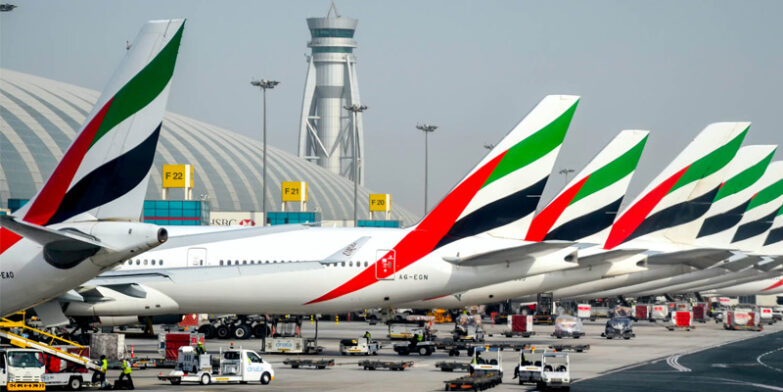
The disruption across the Middle East is beginning to alter the balance of global air cargo capacity, creating tighter supply on several major trade corridors and raising the likelihood of further rate volatility.
While demand for air freight had already been strengthening at the start of the year, the sudden loss of capacity caused by airspace restrictions and network changes is now testing the resilience of global logistics networks. Analysts note that strong cargo volumes combined with reduced connectivity through key aviation hubs could push rates higher across some intercontinental routes in the coming weeks.
For shippers moving cargo between Asia, Europe and North America, the situation highlights how quickly geopolitical developments can affect global transport flows.
Demand growth meets constrained capacity
Before the current disruption, air cargo markets were already experiencing steady growth. Global demand in February increased by around 6% year-on-year, outpacing the expansion of available capacity and pushing utilisation levels higher across several major routes.
This tightening balance between supply and demand meant the market was already vulnerable to external shocks.
With parts of Middle Eastern airspace restricted and several airlines adjusting schedules, a portion of global cargo lift has effectively been removed from the market. In some estimates, the reduction in available capacity has reached double-digit percentage levels, depending on the trade lane.
The impact is particularly noticeable because Gulf carriers play a central role in global air cargo connectivity. Airlines based in the Middle East normally operate a significant share of intercontinental freight movements linking Asia with Europe and North America.
When these hubs face disruption, the effects quickly ripple across the wider network.
Alternative routings reshape air cargo flows
To maintain connectivity, airlines are adjusting flight paths and increasing the use of direct long-haul services between Asia and Europe.
These longer flights allow cargo to bypass affected airspace, but they cannot fully replace the connectivity provided by the region’s hub-and-spoke model. Transit hubs in the Gulf normally provide efficient connections between dozens of origins and destinations, enabling airlines to combine cargo flows and maximise aircraft utilisation.
Without those connections, available capacity becomes more fragmented and harder to match with demand.
This is particularly evident across Asia–Europe routes, where a large share of cargo traditionally moves through Middle Eastern hubs before continuing to its final destination.
As airlines adapt their networks, capacity may remain unevenly distributed across trade lanes, increasing the potential for rate fluctuations in the short term.
Market response already visible
Early indicators suggest that tightening capacity is beginning to influence pricing across several key corridors.
Spot air freight rates have already shown modest increases on some long-haul routes linking Asia, Europe and North America, reflecting the changing balance between available lift and cargo demand.
Market analysts warn that if the current disruption persists, the situation could develop into a more sustained period of upward pressure on rates.
This would not be the first time external events have caused sudden changes in air freight pricing. Previous global disruptions have demonstrated how quickly capacity constraints can influence the cost of moving time-sensitive cargo.
Supply chains adapt to changing conditions
The evolving situation is also highlighting the importance of flexibility within global supply chains.
When major transit hubs are disrupted, cargo flows often shift quickly as airlines introduce new routings, redeploy aircraft or adjust schedules to maintain service continuity.
For shippers, this can mean changes to transit times, routing patterns or booking availability as airlines rebalance their networks.
While the air cargo market has historically demonstrated strong resilience during periods of disruption, the speed at which capacity adjustments occur means businesses must remain alert to rapidly changing conditions.
Monitoring developments across global air cargo markets
The current Middle East situation serves as another reminder that global freight markets are closely linked to geopolitical developments and transport network stability.
At Global Forwarding, our teams monitor developments across international air cargo markets and airline networks to help customers understand how these changes may affect their shipments.
By maintaining close relationships with airline partners and monitoring capacity movements across key trade corridors, we support customers in identifying practical routing options and maintaining supply chain continuity.
Businesses with cargo moving between Asia, Europe and the Americas are encouraged to speak with their Global Forwarding representative to discuss current market conditions and potential routing strategies.