

Global supply chains have entered a more complex and volatile phase, with disruption across the Middle East now materially impacting air, ocean and road freight networks.
What began as a regional operational issue is increasingly reshaping global transport flows, capacity availability and pricing dynamics.
In ocean freight, extended routings, rising bunker costs and port congestion are reducing effective capacity and weakening schedule reliability across key east–west corridors. Air freight is seeing more immediate disruption, with significant capacity withdrawn from major lanes, forcing widespread rerouting and sharp rate volatility. At the same time, road freight markets, while initially softened by seasonal conditions, are now being influenced by rising fuel costs and increased demand for regional and multimodal alternatives.
Together, these developments are increasing planning complexity for shippers, reinforcing the need for flexibility, earlier decision-making and integrated logistics strategies to maintain flow and manage cost risk.
Ocean Freight
Ocean freight markets remain broadly stable in terms of underlying demand, but operating conditions have shifted significantly as Middle East disruption impacts global network efficiency. Extended routings around affected transit corridors are increasing voyage durations, reducing available vessel capacity and placing renewed pressure on schedule reliability.
At the same time, bunker fuel prices have risen sharply, with marine fuel costs increasing by as much as 80% since late February. Given that fuel can account for up to 50–60% of voyage costs, this is materially increasing carrier operating expenses and driving the introduction of surcharges and cost recovery mechanisms. The result has been a sharp uplift in spot rates on key corridors, with transpacific pricing rising by between 7% and 24% in recent weeks, depending on coast and routing.
Congestion is also building at key transhipment hubs as vessels arrive off-schedule, further reducing network efficiency and increasing transit variability. While schedule reliability had recovered to around 60% earlier in the year, it is now trending downwards as disruption persists.
Rates remain relatively stable at index level, but upward pressure is now emerging across Asia–Europe and selected transpacific lanes as effective capacity tightens. The overall market direction is firming, with cost inflation and operational disruption combining to reshape carrier pricing and service structures.
Air Freight
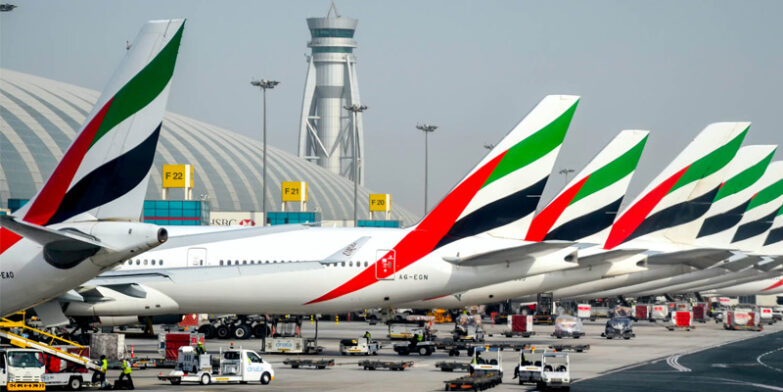
Air freight markets have shifted rapidly into a more constrained and volatile environment, with Middle East disruption removing a significant share of global capacity and fragmenting traditional east–west flows. At the start of March, capacity on the Asia–Europe corridor fell by approximately 25%, reflecting widespread flight cancellations and rerouting.
This disruption has forced carriers and forwarders to reconfigure networks, with cargo increasingly routed via alternative hubs across North Asia and secondary gateways. As a result, capacity imbalances have intensified, particularly in South Asia, where reliance on Middle East hubs has historically been high.
Demand fundamentals remain relatively strong, supported by e-commerce and technology shipments, with volumes up around 5–6% year-on-year. However, reduced connectivity and rising jet fuel costs—up to 58% week-on-week—are tightening available uplift and increasing operational costs.
Rate volatility has increased sharply. South Asia–U.S. and Europe pricing has risen by more than 80%, with some origins such as Bangladesh seeing increases of up to 200% as capacity constraints intensify.
While some capacity is gradually returning, the recovery remains uneven. Short-term conditions are expected to remain unpredictable, with routing complexity and cost pressures continuing to shape air freight planning decisions.
Road Freight
Road freight markets entered 2026 with relatively soft conditions, reflecting seasonal demand weakness and high vehicle availability across the UK and Europe. In February, transport pricing declined, with the TEG index falling by over 3% month-on-month as capacity outpaced demand.
However, the market is now evolving as geopolitical developments and fuel-driven cost inflation begin to influence both cost structures and network dynamics on a global scale.
Rising fuel prices, linked to increases in crude oil, have pushed UK diesel costs up by 30% since the start of the Iran conflict, creating immediate pressure on operator margins and future pricing.
A similar pattern is now evident in the United States, where truckload spot rates rose sharply in March, reaching their highest levels since 2022. This has been driven primarily by a surge in diesel prices, which increased by over 30% month-on-month, alongside tightening supply-side conditions rather than a significant uplift in demand.
At the same time, disruption across ocean and air freight networks is driving a shift towards land-based alternatives. Increased volumes are moving onto regional trucking routes, particularly across Middle East corridors linking Oman, Saudi Arabia and the UAE, where capacity constraints and longer transit times are emerging.
Demand for multimodal and Asia–Europe overland solutions is also rising, with volumes increasing by approximately 15% year-on-year as shippers seek greater flexibility. In the US, similar modal shifts are emerging, with pressure on truckload capacity beginning to influence LTL and intermodal markets.
While short-term pricing remains under pressure in Europe, the overall direction is becoming more complex. Cost inflation, modal shift and tightening supply dynamics in both European and US markets are beginning to rebalance supply and demand across global road freight.
In a market shaped by disruption, cost volatility and shifting capacity, proactive planning is critical. Global Forwarding combines global network reach with strong carrier relationships and global purchasing power to keep costs competitive, even in shifting markets.
Contact us to learn how disciplined planning, modal expertise, and proactive carrier management can help protect your supply chain performance in the most challenging times. Whether navigating congestion, regulatory pressure, or seasonal volatility, our teams are ready to support your next move with confidence.