


With disruption across the Middle East rapidly feeding into fuel markets and reshaping modal operating costs, what began as a supply-side issue is now influencing how carriers operate across ocean, air and road freight.
While headline capacity across shipping lines and airlines remains intact, the underlying constraint is increasingly fuel availability and cost, which is creating a more complex operating environment.
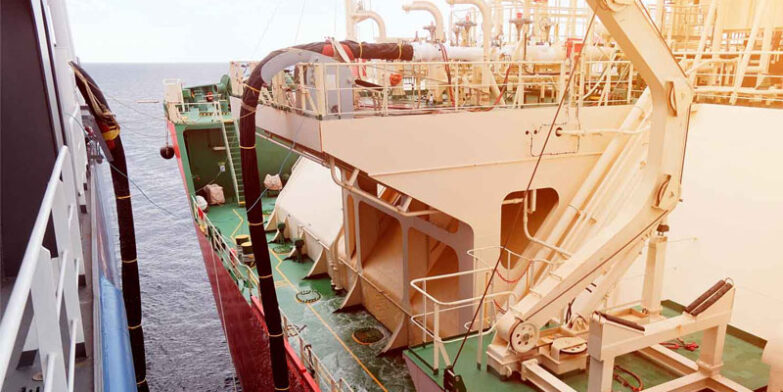
Flows of crude and refined products through key Middle East export routes have reduced significantly, limiting replenishment into global fuel markets. In the short term, major bunkering hubs such as Singapore and key Chinese ports continue to operate, supported largely by existing inventory.
However, this stability masks a more fragile position. With limited new supply entering the system, any prolonged disruption is expected to tighten availability more broadly, extending beyond Asia into European and global markets.
Bunker prices have risen sharply since late February, with increases across all major fuel types. In Asia, very low sulphur fuel oil (VLSFO) has risen by more than 70%, while marine gas-oil has more than doubled in some cases. European markets have also seen significant increases, though generally at a lower rate, creating a widening spread between bunkering regions.
This divergence is beginning to influence where vessels refuel and how services are structured. Carriers are increasingly optimising bunkering strategies to manage both cost and availability, adding another layer of complexity to network operations.
Fuel costs now shaping freight rates and carrier strategy
The impact of rising fuel costs is now clearly visible in ocean freight pricing. Rate increases across key east–west corridors are being driven primarily by cost escalation rather than underlying demand. Transpacific pricing has risen on a week-on-week basis, while Asia–Europe and Mediterranean trades have also recorded significant increases compared with pre-disruption levels.
Carriers are responding by introducing additional fuel recovery mechanisms, including emergency surcharges, as traditional adjustment models struggle to keep pace with rapid market changes. Even with these measures, there remains a gap between current rate levels and the full cost impact of fuel increases.
Operationally, networks are also adapting. Changes to sailing speeds, bunkering locations and service deployment are becoming more common as carriers seek to manage exposure. In more constrained scenarios, reduced frequency or service adjustments remain a possibility if fuel availability becomes a limiting factor.
The effects of fuel disruption are not confined to ocean freight. Air cargo networks are also exposed, particularly where jet fuel availability influences route planning and capacity deployment. At the same time, rising diesel costs are feeding directly into road freight pricing, increasing pressure across inland transport networks.
This creates a cumulative impact across supply chains, where fuel-driven cost increases and operational adjustments are being felt at every stage of the journey.
Managing exposure in a fuel-driven market
In this environment, visibility and early decision-making are critical. By combining real-time market intelligence with global carrier relationships, Global Forwarding supports customers in navigating fuel-driven disruption, by optimising routing, securing capacity and avoiding high-risk bottlenecks.
CONTACT US NOW to review your exposure to fuel volatility and explore alternative routing, carrier and multimodal strategies.