

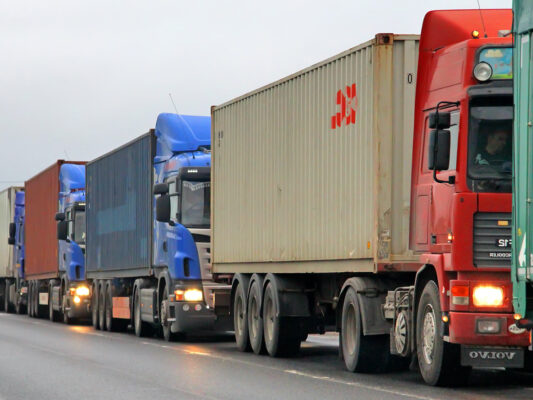
Persistent port and inland transport congestion is supporting elevated ocean freight rates ahead of annual contract negotiations, while the prospect of an early pre-Lunar New Year cargo surge threatens to compound existing supply chain bottlenecks.
Despite improvements at some major container gateways, the operational consequences of the 2026 peak season continue to reverberate through global shipping networks, with strong demand overwhelming port and inland transport infrastructure.
The resulting disruption is having three significant commercial consequences for shippers: strengthening carriers’ negotiating positions ahead of annual freight contract discussions, increasing the risk of delays ahead of Lunar New Year and prolonging disruption across UK and European logistics networks.
While additional vessel capacity and the gradual return to Suez Canal routings might ordinarily be expected to ease freight rates, congestion is absorbing effective shipping capacity and disrupting the traditional relationship between supply, demand and pricing.
Congestion strengthens carriers’ negotiating positions
Asia–Europe spot freight rates remain substantially higher than a year ago, despite some recent easing on the North European corridor.
In early November, Asia–Mediterranean spot rates were 78% higher year on year, while Asia–North Europe rates were up 54%, despite a 3% weekly decline.
Underlying demand remains exceptionally strong. According to Container Trades Statistics, container volumes from Asia to North Europe and the Mediterranean increased by almost 22% in the first three quarters of 2026. September volumes alone increased by 23% to North Europe and 20% to the Mediterranean.
The challenge is that port and inland infrastructure has struggled to accommodate this growth, with congestion and extended vessel turnaround times absorbing shipping capacity that would otherwise be available to the market.
Several major carriers expect a strong fourth quarter, with elevated spot rates potentially influencing the outcome of upcoming Asia–Europe contract negotiations.
Some carrier executives believe that structural limitations in port and inland transport infrastructure will continue to generate periodic rate spikes, supporting higher average freight rates despite substantial additions to the global container fleet.
However, congestion does not eliminate the underlying oversupply of vessel capacity. As operational bottlenecks ease and more services return to shorter Suez Canal routings, additional effective capacity could put downward pressure on pricing.
For beneficial cargo owners (BCO) entering contract negotiations, this creates a complex environment in which current spot market conditions may not reflect the underlying supply and demand balance for 2027.
Early Lunar New Year threatens renewed disruption
With Lunar New Year beginning on 6 February 2027, 11 days earlier than in 2026, the traditional pre-holiday shipping rush is expected to start considerably earlier.
Carriers and market analysts anticipate strengthening demand across both Asia–Europe and trans-Pacific trades, potentially interrupting the recovery of shipping networks still dealing with the consequences of severe weather and peak-season congestion.
The ports of Los Angeles and Long Beach are anticipating a pre-Lunar New Year cargo surge from mid-December, while freight rate benchmarking platform Xeneta has forecast renewed upward pressure on Asia–Europe spot rates as shippers compete for space.
The concern is that this additional demand will arrive before existing cargo backlogs and schedule disruption have been fully resolved, creating renewed pressure on port infrastructure, vessel space and equipment availability.
Shippers should not assume that the traditional post-Christmas shipping window will provide the same opportunities as in previous years.
We explore the implications of the earlier holiday and the essential planning considerations for shippers in a separate article in this bulletin.
Logistics bottlenecks extend beyond the ports
Sustained high import volumes, delayed vessel arrivals, adverse weather and recent rail disruptions continue to place considerable pressure on UK and Ireland logistics networks.
Although services are recovering, existing cargo backlogs and high inland storage utilisation mean that restoring normal operations will take time.
At London Gateway, average vessel waiting times were recently reported at two days, despite dry and refrigerated container yard occupancy easing to 75% and 58% respectively.
High concentrations of laden containers continue to restrict productivity, while a four-hour IT outage on 19 November disrupted terminal operations and resulted in multiple rail service failures. Berth restrictions are expected to remain in place until mid-December.
At Southampton, vessel waiting times averaged 1.5 days, with berth schedules improving but limited flexibility to accommodate unscheduled vessel calls.
Congestion at major domestic and continental European gateways is complicating the recovery. One Hamburg terminal reported 99% yard occupancy, with refrigerated container capacity already exceeded, while Bremerhaven was operating at 89% yard occupancy.
These interconnected pressures mean that disruption at one gateway or inland transport hub frequently has consequences elsewhere, limiting the effectiveness of alternative routings.
For importers, the implications extend beyond delayed vessel arrivals to potential additional storage, demurrage, detention and inland transport costs.
Managing the commercial consequences of congestion
Port congestion is no longer simply an operational issue. It is influencing freight procurement, inventory availability, transport costs and the ability of businesses to fulfil customer commitments.
With further seasonal demand approaching, shippers should consider:
- Balancing current spot market conditions against longer-term capacity fundamentals when negotiating freight contracts.
- Reviewing shipment priorities and bringing forward critical orders ahead of the pre-Lunar New Year rush.
- Coordinating import container collections and empty equipment returns to minimise additional costs.
- Assessing alternative gateways, routings and inland transport options before disruption necessitates their use.
- Monitoring verified shipment milestones to align inland transport and warehouse arrangements with actual cargo movements.
Our established presence across Asia, EU and United States provides local operational intelligence at both ends of the supply chain, supporting informed freight procurement, proactive shipment planning and alternative transport arrangements.
Talk to our team about your upcoming shipments and freight procurement requirements, as we work to minimise the operational and commercial impact of congestion on your supply chain.