

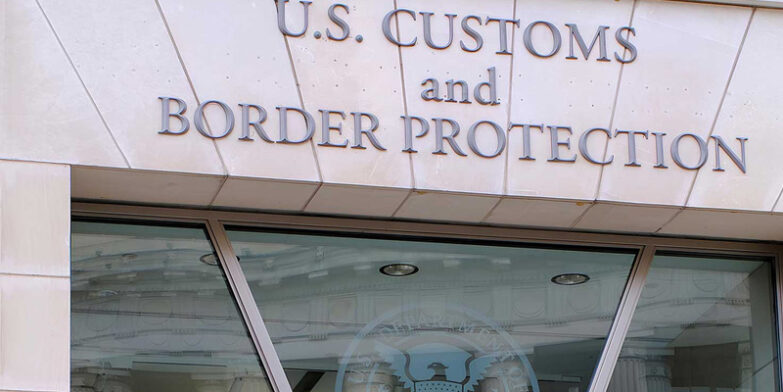
Businesses have until 5 January 2027 to ensure their customs arrangements comply with new importer requirements, as US Customs and Border Protection (CBP) intensifies enforcement and places greater emphasis on corporate ownership, commercial accountability and the accuracy of customs declarations.
For many international businesses, establishing a US subsidiary or appointing a local customs broker has provided a relatively straightforward framework for importing goods into the United States. However, forthcoming regulatory changes mean that some long-established arrangements may no longer satisfy US customs requirements.
The changes are particularly significant for exporters selling on Delivered Duty Paid (DDP) terms, businesses importing through American subsidiaries and US buyers relying on overseas suppliers to manage customs clearance.
With ocean freight departing Asia in early December potentially arriving after the new regulations take effect, businesses need to assess their exposure now.
Established import arrangements face greater scrutiny
CBP is intensifying its Right to Make Entry reviews, investigating whether businesses declaring themselves as importers have the legal entitlement to enter merchandise into the United States.
The enforcement programme targets tariff evasion, undervaluation, fraudulent DDP arrangements, shell companies and transhipment designed to conceal the true country of origin.
However, legitimate businesses operating established supply chains may also experience disruption while customs officers verify their eligibility.
Initial investigations typically focus on:
- Valid Powers of Attorney and the authority of individuals signing them.
- Government-issued identification and verification of importer identification numbers.
- Corporate registration, ownership and supporting business information.
More extensive investigations may require purchase and resale invoices, proof of payment, ownership records and evidence supporting declared customs values and countries of origin.
Of particular concern is that investigations may extend beyond individual consignments, with pending and subsequent customs entries associated with an importer potentially held across multiple US gateways.
With terminal free time often limited to four or five days, extended customs holds could generate significant storage and demurrage costs, alongside disruption to inventory replenishment, manufacturing and customer deliveries.
A US subsidiary may no longer qualify as a domestic importer
CBP’s interim final rule, Heightened Requirements for Foreign Importers of Record, introduces more prescriptive criteria for determining whether businesses qualify as US or foreign Importers of Record (IOR).
From 5 January 2027, individuals qualifying as US importers must be US citizens or lawful permanent residents.
Businesses must be established under US law, located in the United States and satisfy at least one of two additional conditions:
- At least 51% of beneficial ownership must be held by US citizens or lawful permanent residents who control the business.
- The business must directly own a significant amount of unencumbered US real estate.
Maintaining an American business address, employing local staff or establishing a US subsidiary will not necessarily be sufficient.
CBP may examine beneficial ownership through multiple layers of corporate structures, alongside physical assets, domestic operations and financial circumstances.
Consequently, some US subsidiaries of overseas businesses could find themselves classified as foreign importers, despite having operated successfully in the American market for many years.
Importers or their brokers will need to declare US IOR status on individual customs entries, with brokers required to verify eligibility and retain supporting documentation for five years.
Inaccurate declarations could result in financial penalties, withdrawal of immediate delivery privileges and, in serious cases, exposure under the US False Claims Act.
Brokerage capacity could become a compliance bottleneck
Under the new regulations, foreign Importers of Record must either hold validation under the Customs Trade Partnership Against Terrorism (CTPAT) programme or appoint a CTPAT-validated licensed customs broker.
CTPAT is a voluntary supply chain security programme administered by CBP, requiring participating businesses to demonstrate compliance with established security and risk management standards.
Currently, Canadian foreign importers are the only foreign IORs eligible for validation as importers, meaning most overseas businesses will need to appoint a suitably validated customs broker.
CBP estimates that approximately 63,500 foreign importers currently use brokers without CTPAT validation, while only around 21% of active US customs brokers hold that status.
This disparity could place considerable pressure on validated brokerage capacity as the implementation deadline approaches.
For overseas businesses, particularly those selling on DDP terms, confirming that existing brokerage arrangements satisfy the new requirements should be an immediate priority.
Customs enforcement is becoming increasingly data-driven
The new importer requirements form part of a broader shift towards more intensive, technology-supported customs enforcement.
CBP is increasingly using data analytics within its Automated Commercial Environment (ACE) to identify discrepancies, assess risk and challenge customs declarations.
There are indications that customs officers are becoming more willing to issue notices of action without first requesting additional information, potentially reducing the opportunity for importers to explain discrepancies before additional duties are assessed.
Businesses receiving formal requests for information, known as CF28s, should coordinate responses across their finance, procurement, logistics and compliance functions to ensure that commercial records and customs declarations are consistent.
Meanwhile, evolving Section 301 and Section 232 tariffs, alongside product-specific measures scheduled for introduction through 2028, will further complicate classification and duty calculations.
Airfreight is also subject to expanding security data requirements, although full enforcement of enhanced Air Cargo Advance Screening (ACAS) requirements has been postponed until 1 May 2027.
The direction of US customs policy is clear: authorities expect greater transparency, accountability and verifiable information from every participant in the international supply chain.
Five priorities for businesses trading with the US
With the January deadline approaching, Hecny Forwarding recommends that businesses review five critical areas:
- Importer eligibility: Establish whether existing importing entities, including US subsidiaries, satisfy the new domestic IOR criteria.
- Brokerage arrangements: Confirm that appointed customs brokers hold the necessary CTPAT validation where required.
- Trading terms: Review DDP arrangements, understand where customs responsibilities and liabilities sit, and assess whether alternative Incoterms are appropriate.
- Supporting documentation: Ensure corporate ownership records, commercial transactions and customs declarations are accurate, consistent and readily accessible.
- Contingency arrangements: Assess the operational and financial exposure associated with extended customs holds and establish appropriate response plans.
CTPAT-validated US customs expertise
Global Forwarding’s established operations in New Jersey combine international freight forwarding capabilities with specialist US customs brokerage expertise and CTPAT validation.
Our team helps importers and overseas exporters understand regulatory developments, review importer eligibility, coordinate customs documentation and identify potential compliance issues before cargo is dispatched.
Whether you are a US importer, an overseas business selling on DDP terms or a multinational importing through a US subsidiary, contact Global Forwarding now to review your customs arrangements and prepare for the January deadline.