

The United States is entering a more intensive phase of customs enforcement, with federal agencies increasing scrutiny on both imports and exports and placing far greater responsibility on businesses to prove compliance at every stage of the supply chain.
Recent policy direction, including a new Executive Order on strengthening customs enforcement, signals a clear shift. Authorities are no longer focused primarily on duty collection but on verifying the legitimacy, accuracy and traceability of shipments. For importers, this means more detailed disclosure requirements, tighter eligibility rules and significantly higher penalties for non-compliance.
At the same time, industry reports indicate that cargo inspections and shipment holds have risen sharply, reaching levels not seen in decades. This is already affecting transit times, costs and operational reliability across US trade lanes.
Enforcement is increasing across the board
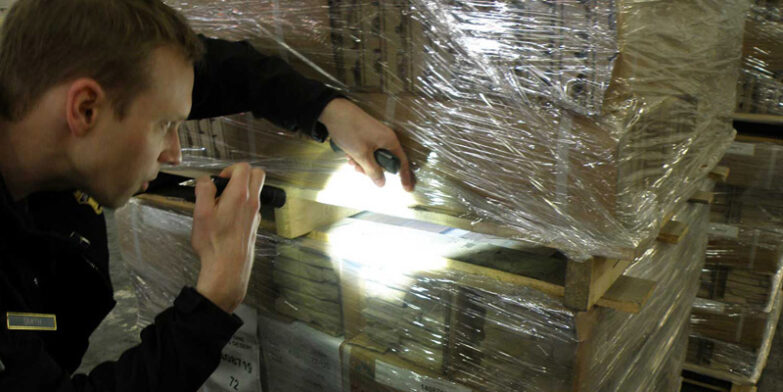
Customs intervention is no longer limited to high-risk shipments. Businesses are seeing a broader application of inspections, documentation checks and cargo holds, often driven by data-led targeting and intelligence.
These holds can arise from a wide range of issues, from minor documentation inconsistencies to more complex concerns around valuation, classification, transhipment or product compliance. While some are resolved quickly, others can delay cargo for days or weeks, particularly where physical inspections or multiple agencies are involved.
Enforcement practices also vary significantly by port, creating an additional layer of unpredictability for supply chains moving through different US gateways. In some locations, a more collaborative approach helps resolve issues efficiently, while others apply stricter controls that can extend delays.
Importantly, increased scrutiny is now affecting exports as well. When import volumes fluctuate, enforcement attention can shift to outbound cargo, exposing exporters to the same disruption and cost pressures.
The real impact: delays, disruption and cost
For many businesses, the biggest risk is not fines but operational disruption. When shipments are placed on hold, containers can quickly exceed their allocated free time at terminals. This leads to demurrage and storage charges that continue to escalate while cargo is under customs control. In some cases, multiple containers linked to the same bill of lading are delayed together, multiplying the financial impact.
Costs can rise rapidly and in extreme cases may exceed the value of the goods being transported. At the same time, delayed cargo can disrupt production schedules, inventory planning and customer commitments.
Responsibility for these charges remains a point of tension across the industry. While cargo owners argue that fees incurred during government holds are outside their control, terminal operators continue to apply standard charging structures, increasing the need for shippers to minimise risk upstream.
Compliance is shifting upstream
One of the most significant changes is where compliance now sits within the supply chain.
Historically, customs documentation was often finalised close to shipment. That approach is becoming increasingly unworkable. New requirements, including mandatory electronic filing for regulated products, mean that accurate, structured data must be prepared much earlier.
Product compliance now depends on consistent information being shared across manufacturers, suppliers, laboratories, freight forwarders and customs brokers before cargo is booked. Certificates must match shipments precisely, down to factory, batch and product specification level.
Even small discrepancies can trigger inspections, delays and additional cost exposure. Informal or incomplete supplier information is no longer sufficient where authorities expect verifiable, data-driven submissions.
As enforcement tightens, visibility across the supply chain has become a critical requirement rather than a competitive advantage.
Importers need to demonstrate full traceability, from raw materials and production through to final delivery. This includes understanding supplier relationships, verifying testing and certification, and ensuring every document can be accurately matched to each shipment.
Without this level of control, customs clearance becomes slower, more expensive and significantly more vulnerable to disruption.
Preparation will define performance
With stricter rules and higher penalties expected to increase over the coming months, businesses should review their customs processes now.
Accurate product data, robust internal controls and early-stage compliance checks can significantly reduce the likelihood of delays and unexpected costs. In a more enforcement-driven environment, preparation is becoming one of the most effective ways to protect supply chain performance.
From our base in New Jersey Global Forwarding supports UK and European businesses trading with the United States, as well as US-based importers. We provide proactive customs planning, early-stage compliance validation and end-to-end supply chain visibility to help ensure documentation, product data and shipment plans are aligned before cargo moves.
By coordinating compliance information, shipment documentation and customs processes across origin and destination teams, businesses can reduce the risk of delays and disruption as CBP enforcement intensifies and new eFiling requirements take effect.