


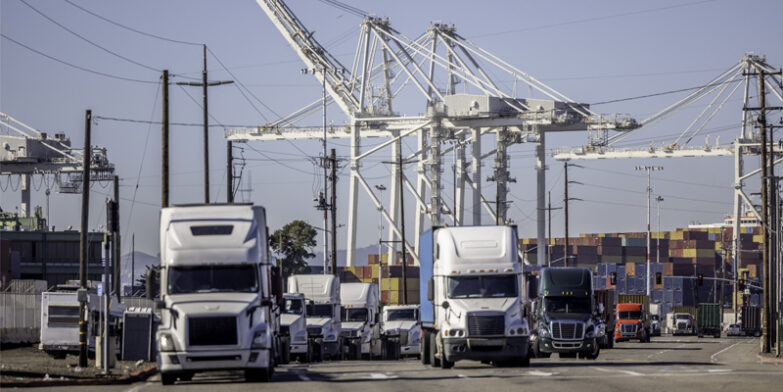
Global supply chains are being driven less by normal demand cycles and more by disruption risk, cost volatility and policy change.
The near‑closure of the Strait of Hormuz is distorting fuel flows, tightening energy supply and pushing transport costs higher across modes. At the same time, rising trade barriers and shifting measures are making landed costs harder to forecast, increasing financial risk on long‑haul flows.
Manufacturing activity has rebounded strongly. The US manufacturing PMI reached 54 in May, its highest level in four years, while the U% index hit 53.9, also a four‑year high. However, much of this strength reflects front‑loading, safety‑stock rebuilding and accelerated purchasing as firms move early to get ahead of further price rises, shortages and disruption linked to the Middle East conflict.
Ocean Freight
Ocean freight has shifted into an early peak, with Asia–Europe and Transpacific trades tightening as Q1 demand growth outpaces capacity additions. Trade volumes on Asia–Europe are reported around 15% higher year‑on‑year, while weekly capacity has risen by only 7.5% to just over 542,000 TEU, driving fuller vessels and stronger carrier pricing power.
GRIs of approximately USD600 per TEU took effect from 1 June, with further PSS of a similar magnitude expected, supported by emergency bunker surcharges around USD 265 per TEU and Brent crude trading near USD 90 per barrel. The SCFI now sits more than 50% above late‑May 2025 levels and significantly above early‑January 2026, underlining the speed of the shift.
Asia eastbound remains relatively soft with good space and equipment, but westbound Asia–Europe, Transpacific and Middle East‑linked services are characterised by overbooking, elevated rates and selective capacity management. CMA CGM’s decision to resume Suez transits on specific services will shorten some routes but does not yet signal a full network reset, which is unlikely before 2027.
Near‑term, spot rates on Asia–Europe could move into the USD 6,000–7,000 per 40ft range as shippers front‑load ahead of BAF increases and carriers maintain tight control of capacity.
Air Freight
Airfreight markets remain constrained and pricing has clearly firmed, with the rate increases anticipated earlier in the quarter now feeding through across key trade lanes.
The global Baltic Air Freight Index is up nearly 3% week‑on‑week and sits about one‑third higher year‑on‑year, while other datasets indicate spot levels around 50% above last year, suggesting only a brief pause in an otherwise upward trend.
Capacity has improved but remains uneven. Gulf carriers have largely resumed services yet still operate around 48% below pre‑war capacity, and some routes are flown with smaller aircraft, limiting effective belly‑hold space. Chinese carriers continue to operate full schedules, supported by strong e‑commerce flows and accelerated exports ahead of EU taxation changes on 1 July, which are expected to generate an unseasonal June spike.
Rates from Hong Kong and Shanghai are rising week‑on‑week and remain substantially higher than a year ago, while outbound London Heathrow pricing has surged on US‑bound traffic linked to World Cup‑related activity. Transpacific rates from the US to Europe, China and South America are also moving higher, and sea–air alternatives via the US West Coast are attracting interest. Overall, elevated fuel costs, partial capacity recovery and regulatory front‑loading point to a firm, upward‑leaning rate environment into the summer.
Road
Road freight markets across the UK, EU and US remain operationally stable entering June, but underlying cost pressures are steadily firming pricing conditions. In the UK, the TEG Road Transport Price Index rose 1.2% in May to 134.2, although softer consumer demand continued limiting broader haulage increases. UK haulage demand declined by around 2.8% year on year, reflecting weaker spending on major consumer purchases and more cautious inventory positioning.
Across Europe, seasonal driver holidays, reduced agency cover and public holidays in Ireland, Croatia, Luxembourg and Slovenia are tightening available capacity and extending lead times on short-notice bookings. Contract rates remain under upward pressure from diesel costs, toll increases and persistent driver shortages, particularly on core UK–EU corridors.
In the US, road freight costs have accelerated much more sharply as diesel inflation continues driving surcharge increases across domestic trucking networks. US truckload producer price indices rose almost 19% year on year in April, while less-than-truckload pricing increased by around 20%, reflecting sustained fuel-linked cost escalation. US diesel prices remain more than 60% higher year on year, with inventories below seasonal norms and further upward pressure expected heading into autumn.
Overall, the global road freight market remains functional but increasingly cost-sensitive as fuel, labour and capacity constraints continue reshaping pricing dynamics.
In a market defined by tightening ocean and air capacity, elevated fuel costs and gradually firming road conditions, proactive planning is essential. Global Forwarding combines global network reach with strong carrier relationships and disciplined procurement to help protect cost and service performance, even as peak season pressures intensify.
Contact us to explore how structured planning, multi‑modal flexibility and proactive carrier management can safeguard your supply chain through the summer period and beyond. The Hecny Group is ready to support your next move with confidence.