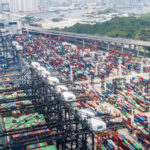


The opening of China’s Pinglu Canal and new international shipping services from river ports highlight a major transformation in the country’s logistics infrastructure, connecting inland manufacturing centres more directly with global markets.
Investment in waterways, port facilities and multimodal connections is allowing manufacturers further inland to access international shipping services more efficiently, reducing dependence on traditional coastal gateways.
As China’s industrial regions expand production of vehicles, electronics, machinery and renewable energy equipment, these developments are creating new opportunities to reduce inland transport costs, improve routing flexibility and build more efficient international supply chains.
Pinglu Canal creates a new gateway to Southeast Asia
The opening of the 134.2-kilometre Pinglu Canal on 16 September 2026 represents a major milestone in China’s inland transport development.
Connecting the Xijiang River system in Guangxi directly with the Beibu Gulf, the RMB72.7 billion project provides a shorter route from southwestern China to Southeast Asian markets.
The canal accommodates vessels of up to 5,000 tonnes and reduces the inland waterway journey to the sea by more than 560 kilometres compared with traditional routing through Guangzhou.
Its opening coincided with new river-sea services connecting Nanning with Can Tho in Vietnam and Yangpu Port in Hainan.
Crucially, qualifying river vessels can access seaport terminals at Qinzhou without transferring cargo to coastal vessels, reducing handling requirements and improving efficiency.
Regional authorities estimate the corridor could reduce logistics costs for relevant cargo flows by 18–30%, with annual transport savings potentially exceeding RMB5 billion.
River ports become international gateways
The Pinglu Canal is part of a much broader transformation, with investment allowing international shipping services to operate closer to China’s inland manufacturing centres.
Wenzhou, on the Oujiang River in Zhejiang province, recently launched a direct service to West Africa, connecting manufacturers in southern Zhejiang and northern Fujian with markets including Ghana and Guinea. The new route could reduce transit times by approximately seven days.
Similar developments are taking place along the Yangtze River, where ports including Taicang, Nanjing, Jiangyin and Wuhu are expanding international container-handling capabilities.
Improved navigation channels, deeper-water terminals and stronger road and rail connections are allowing these ports to serve growing industrial regions more effectively.
The result is a transport network in which river ports increasingly function as international gateways rather than simply feeder points for major coastal hubs.
Inland manufacturing gains global connections
China’s extensive waterways already connect major industrial centres, including Chongqing, Wuhan and Nanjing, with international shipping networks.
The New International Land-Sea Trade Corridor is extending these connections, linking western and southwestern manufacturing regions with ports along the Beibu Gulf.
Growing exports of automobiles, electronics, machinery and new-energy products are supporting demand for more sophisticated transport connections.
For manufacturers and international buyers, this creates opportunities to combine river, rail and road transport, moving cargo from inland production facilities to international gateways with fewer handling stages and potentially lower costs.
More routes create more supply chain options
Although the Pinglu Canal primarily serves Southeast Asian trade and Wenzhou’s new service targets Africa, the wider infrastructure transformation has implications for global supply chains.
Not every new service will directly improve transit times to Europe or North America. However, stronger inland connections can change how cargo reaches established east–west shipping routes.
Manufacturers may now have several options for moving containers to international departure ports, combining inland waterways, rail, road and consolidation services.
The most efficient solution depends on shipment volumes, cargo characteristics, transit requirements and total logistics costs.
Rather than automatically selecting the nearest major coastal port, shippers can review their entire origin-to-destination journey to identify alternative gateways, multimodal connections and opportunities to reduce costs.
Turning China’s infrastructure investment into supply chain advantage
China’s expanding transport network creates significant opportunities, but realising them requires detailed local knowledge, established relationships and the ability to coordinate multiple transport modes.
With access to 12 offices across China, Global Forwarding has the local presence and operational expertise to identify opportunities at their source.
Our colleagues understand China’s manufacturing regions, inland transport networks and international gateways, enabling us to evaluate alternative routings, consolidation options and multimodal connections that conventional shipping arrangements may overlook.
The real value of China’s infrastructure transformation lies not simply in the new routes being created, but in knowing how to use them.
Whether that means using an alternative inland port, combining river and rail transport or selecting a more efficient international gateway, Global Forwarding can design solutions that improve flexibility, reliability and cost efficiency.
If you’re sourcing or manufacturing in China, don’t assume your existing shipping route is your most efficient option. Talk to Global Forwarding and discover how we can unlock smarter transport connections, alternative gateways and new opportunities to reduce your total logistics costs.