

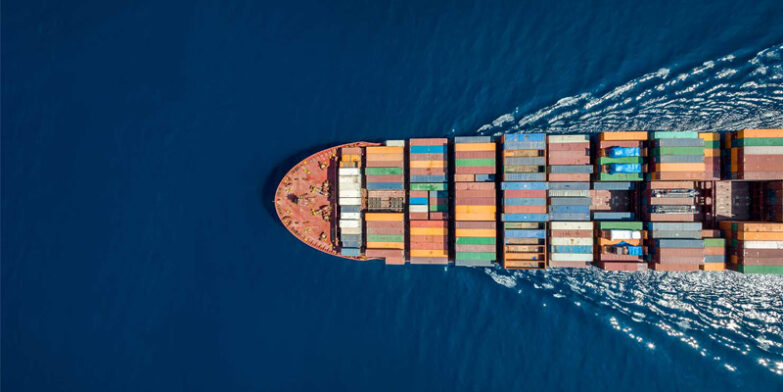
Record container volumes demonstrate the resilience of international trade, but rising freight costs, shifting regional demand and the prospect of substantial new shipping capacity are creating a more complex outlook for global shippers.
Despite geopolitical uncertainty, changing tariffs and persistent disruption to shipping networks, businesses are moving more containers than ever before.
Rather than retreating from international markets, manufacturers, retailers and importers are adapting their sourcing strategies and transport arrangements to maintain international trade flows.
However, the latest figures reveal more than another record. They highlight significant changes in where trade is growing, what it costs to move goods and how shipping conditions could evolve as new vessels enter service.
Container volumes reach another milestone
Global container movements reached a record 17.46 million TEU in August 2026, surpassing July’s previous high, according to Container Trades Statistics (CTS).
Volumes increased:
- 3.7% compared with August 2025.
- 7.2% compared with August 2024.
- 12.9% compared with August 2023.
Across the first eight months of 2026, global container trade grew 4.7% year on year, demonstrating sustained demand despite higher operating costs, geopolitical disruption and uncertainty surrounding trade policy.
However, August volumes increased just 0.5% compared with July, suggesting that growth momentum may be moderating even as absolute volumes reach new highs.
The figures suggest that global trade is not retreating but adapting, with businesses maintaining international supply chains while adjusting to changing economic and political conditions.
Asia drives growth as regional differences widen
The Far East remains the principal engine of containerised trade expansion.
Exports increased 8% year to date, representing approximately 6.3 million additional TEU compared with the same period in 2025.
Every destination region recorded growth in Far Eastern exports, with Sub-Saharan Africa and South and Central America showing particularly strong percentage increases.
North American imports also recovered following a weaker start to the year, rising 2% year to date, while transpacific volumes increased 5%.
European exports returned to broadly neutral growth after contracting earlier in 2026.
However, imports into the Indian Sub-Continent and Middle East declined 5%, while exports fell 10%, equivalent to almost one million fewer TEU.
Why record volumes are not delivering lower freight costs
The relationship between container demand and shipping prices has become increasingly complicated.
The CTS Global Price Index reached 117 points in August, its highest level since July 2024, following an increase of approximately 50% since January. The index was also 44% higher than in August 2025.
These increases reflect more than stronger demand. Longer vessel journeys, rerouting around security-sensitive areas, congestion and schedule disruption absorb capacity that would otherwise be available for additional shipments.
Consequently, even when the global fleet appears sufficient to accommodate demand, effective capacity on individual trade lanes can remain constrained.
For shippers, freight rates, available space and schedule reliability do not necessarily move together.
A competitive quotation offers limited value if cargo is subsequently rolled, connections are missed or unpredictable arrivals disrupt onward distribution.
Today’s constraints could become tomorrow’s oversupply
While container volumes continue setting records, the longer-term outlook presents a different challenge.
Ocean carriers have committed to substantial fleet expansion, with the global vessel order-book reportedly equivalent to more than 46% of the existing fleet.
Approximately 1,000 new vessels are expected to enter service during 2027 and 2028, potentially adding capacity faster than cargo demand grows.
If trade growth moderates while new vessels enter service, shipping markets could move towards overcapacity and increased competition.
A sustained return to shorter routes through the Suez Canal could amplify this effect by releasing capacity currently absorbed by longer voyages.
However, additional vessels will not necessarily guarantee lower rates or more reliable services. Carriers can adjust deployments and blank sailings to manage supply, while congestion and regional imbalances may continue affecting individual routes.
The result could be greater rate volatility, with competitive pricing interrupted by localised capacity shortages.
What this means for shippers
Continued growth in container trade is encouraging, but changing market conditions reinforce the importance of flexible shipping strategies.
Review routing options. Diversifying trade flows and developing infrastructure may create opportunities to use alternative gateways, consolidation arrangements and inland connections.
Balance price and reliability. The lowest freight rate may not deliver the best overall outcome when schedule disruption, inventory costs and delivery commitments are considered.
Prepare for changing capacity. New vessels could increase competition, but effective capacity will continue to depend on individual trade lanes, carrier deployment and operational conditions.
For international businesses, the opportunity lies in responding to changing trade patterns rather than relying on established shipping arrangements.
Turn growing global trade into competitive advantage
As container volumes grow and trade patterns shift, choosing the right routes, carriers and shipping arrangements becomes increasingly important.
Global Forwarding’s extensive Asian network and established international carrier relationships help customers identify efficient routing options, secure dependable capacity and control freight costs.
Talk to Global Forwarding about making your international shipping arrangements more efficient, flexible and resilient.