

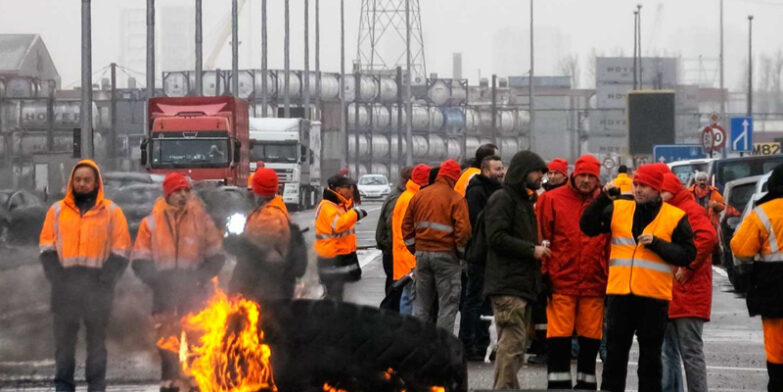
Labour disputes at two of Northern Europe’s busiest container gateways – Rotterdam and Antwerp – severely disrupted cargo flows earlier this month, with ripple effects reaching transatlantic supply chains.
Although strikes have paused, congestion and vessel delays continue to impact trade between Europe and North America.
A coordinated walkout by lashing workers in Rotterdam and work-to-rule protests by harbour pilots in Antwerp and Zeebrugge brought port operations to a near standstill from 8 October, leaving more than 150 ships waiting at anchor. The disruption spread to nearby ports, including Zeebrugge and Ghent, limiting options for rerouting and further delaying European cargo bound for the United States.
The situation worsened as Storm Amy disrupted North Sea shipping routes, compounding the backlog and doubling the queue of vessels waiting to enter Rotterdam. Negotiations between unions, employers, and port authorities have since led to a court-mediated suspension of strikes in the Netherlands and a temporary pause in Belgian pilot protests, with talks expected to continue into late October.
Despite the resumption of port operations, analysts warn it may take until the end of the month for Rotterdam and Antwerp to return to normal. The congestion has already affected vessel rotations on key transatlantic routes, delaying U.S.-bound shipments of consumer goods, automotive parts, and perishables.
Broader Implications for U.S. Trade
Container carriers have been forced to adjust schedules, extend turnaround times, and divert ships through alternative European ports. This realignment underscores how vulnerable major trade lanes remain to localised industrial action.
For U.S. shippers, the ongoing congestion could translate into later-than-expected arrivals, temporary rate increases, and higher storage costs. Analysts also note that market volatility has spread to global shipping equities, reflecting broader investor unease over supply chain fragility, geopolitical tensions, and uncertainty surrounding the reopening of the Red Sea and Suez Canal routes.
While port operations are gradually normalising, the return to pre-crisis vessel rotations will take time and as simultaneous ship arrivals strain terminal capacity, further temporary congestion remains likely.
The recent strikes revealed just how fast disruption can spread through global supply chains. Stay ahead of delays with Global Forwarding’s advanced Track & Trace visibility, giving you real-time insight, proactive alerts, and the confidence to manage every shipment with certainty.
Clarity Track & Trace