

The global container fleet continues to expand, but new vessels do not necessarily mean more available space. Port congestion, weather disruption, longer delays and vessels displaced from scheduled rotations are absorbing millions of TEU and creating very different capacity conditions between major trade lanes.
For shippers, the distinction between nominal capacity and effective capacity is becoming increasingly important.
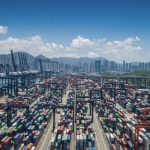
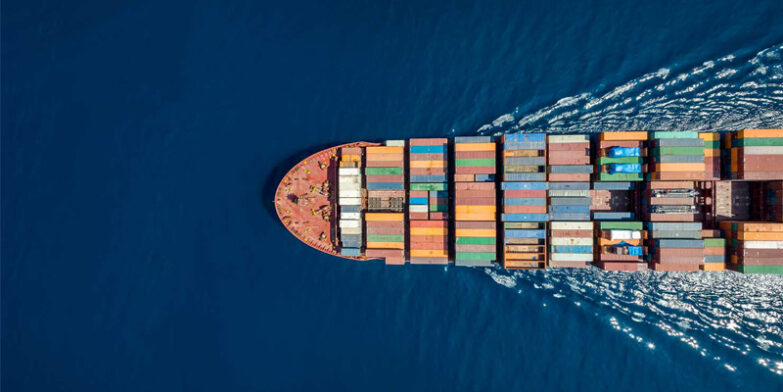
The global container fleet has expanded substantially as new vessels enter service, yet more than 4.3 million TEU was waiting to berth at ports worldwide in late August. That represents 12.6% of the 34.4 million TEU global fleet.
In absolute terms, congestion has now exceeded the approximately four million TEU caught up during the 2022 pandemic peak, although the larger fleet means the proportion affected remains lower than it was then.
At the same time, around 5% of deep-sea container capacity is being absorbed specifically by vessel delays, compared with just over 2% during the relatively stable years before the pandemic.
Together, these pressures help explain why adding ships has not necessarily delivered the improvement in space, schedules and reliability that headline fleet growth might suggest.
Asia is at the centre of the latest disruption
North Asian ports currently account for roughly half of global congestion, with around 2.2 million TEU tied up as successive typhoons disrupt operations and vessel schedules.
Typhoons Bavi, Noul and Dolphin were followed by Narra in late August, while another storm threatened the Zhejiang and Fujian coastline around Ningbo and Xiamen.
The earlier disruption around Shanghai and Ningbo demonstrated how quickly severe weather can remove usable capacity.
Shanghai’s vessel queue increased from 24 ships in early August to 139 by 17 August, while Ningbo rose from 11 to 77. Waiting times reached several days on some services, forcing carriers to omit calls and alter rotations to recover schedules.
Across Shanghai, Ningbo and Yantian, earlier disruption was estimated to have removed almost 500,000 TEU of scheduled capacity from affected services.
For global supply chains, however, the consequences extend far beyond the ports where the disruption begins.
A delayed vessel creates problems throughout its rotation
Once a ship falls significantly behind schedule, the disruption can follow it across an entire service.
A vessel arriving late may miss its allocated berth at the next port. Carriers may then omit calls to recover time, leaving containers to be rolled onto subsequent sailings.
Cargo discharged at alternative ports creates another challenge. During the recent disruption in China, containers have been redirected through hubs including Busan and Hong Kong. Those shipments subsequently require additional feeder movements and handling to reach their intended destinations, potentially transferring congestion elsewhere in the network.
The effect is cumulative. Even when weather improves and the original queue begins to clear, vessels, containers and cargo can remain out of position for weeks.
That is one reason schedule reliability has struggled to return to historic norms.
Reliability has improved, but the old normal has not returned
Global schedule reliability is currently around 63%. That represents a considerable improvement on the extreme disruption experienced during the pandemic, but remains below the 70–80% levels commonly recorded before 2020.
Delayed vessels are also taking longer to recover. Average delays have increased from around three to four days before the pandemic to approximately five to five-and-a-half days.
The difference may appear relatively modest for an individual vessel, but multiplied across hundreds of ships and repeated rotations, those additional days absorb significant amounts of fleet capacity.
For shippers, that can mean fewer viable sailing options even when published schedules suggest that sufficient capacity exists.
Trade lanes are feeling the pressure differently
Transpacific demand remains resilient, while congestion at Chinese ports is limiting effective capacity. Pressure is particularly evident towards the US East Coast, where available capacity is also being influenced by Panama Canal restrictions.
Transit slots through the canal are expected to reduce further during September, while tightening draught restrictions add another operational consideration for services using the route.
Asia–Europe presents a different picture. Demand has been softer, and even vessels displaced by Asian congestion have so far failed to generate the same upward rate pressure evident on the Transpacific.
That divergence illustrates why global fleet statistics and headline freight indices can provide only part of the picture.
A market can appear well supplied globally while individual corridors, ports and departure windows remain considerably tighter.
New ships cannot immediately replace lost effective capacity
The industry continues to receive substantial new vessel capacity, with relatively limited demolition of older tonnage.
In a stable operating environment, that additional supply would normally be expected to improve space availability and place downward pressure on freight rates, but today’s operating environment is more complicated.
Congestion removes ships from productive service. Longer voyages increase the number of vessels required to maintain weekly frequencies. Port omissions displace containers and schedules. Weather can close major gateways, while restrictions at strategic infrastructure such as the Panama Canal can reduce network flexibility.
Charter demand has consequently remained strong as carriers seek additional tonnage to protect schedules and cover gaps.
The result is a market where physical fleet capacity can increase at the same time as usable capacity tightens.
Global reach creates more options when capacity tightens
When congestion removes capacity from a trade lane, access to alternatives becomes particularly valuable. Global Forwarding combines global ocean freight capability with an international Hecny Group network spanning major manufacturing, sourcing and consumer markets. Its local teams and carrier relationships can provide access to alternative sailings, gateways and routings when established supply chains come under pressure.
From Asia sourcing markets through European and UK gateways to the Americas, Global Forwarding can combine ocean freight, customs, warehousing and onward distribution to provide greater flexibility across the complete shipment journey.
When nominal capacity no longer reflects the space actually available, Global Forwarding can help shippers identify where capacity remains accessible and build the routing alternatives needed to keep global supply chains moving.