

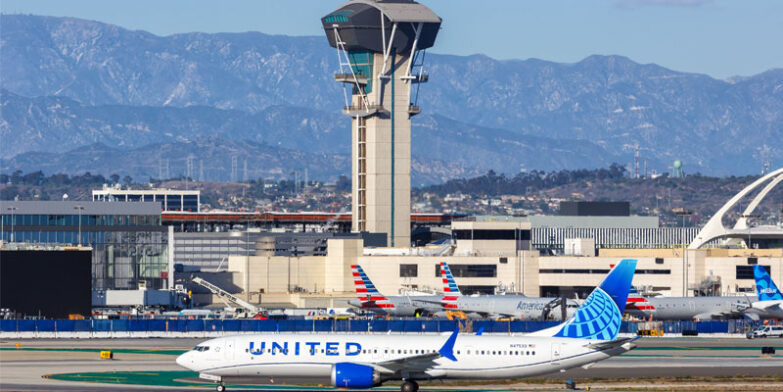
The nationwide suspension of US flight departures on 13 November demonstrated how a localised infrastructure failure can disrupt international air cargo networks, highlighting the importance of contingency planning for businesses dependent on time-critical shipments.
Airfreight is often the contingency solution when other transport modes fail to meet critical delivery deadlines. But what happens when the airfreight network itself suffers a major operational failure?
The recent Federal Aviation Administration (FAA) nationwide ground stop provided a stark illustration of the vulnerability of modern aviation networks, when work to upgrade communications equipment at a facility in Arkansas brought US flight departures to a standstill.
Although the suspension lasted just four and a half hours, thousands of flights were cancelled or delayed, disrupting aircraft rotations, international connections and cargo movements for several days.
With further infrastructure upgrades planned across the US aviation network, shippers should consider how they would respond to similar disruption in the future.
Modernising critical infrastructure introduces new risks
The FAA’s telecommunications infrastructure is scheduled for replacement in 2028, but upgrading systems while maintaining one of the world’s busiest aviation networks presents considerable technical and operational challenges.
New equipment must function alongside legacy technology throughout the transition, creating potential compatibility issues and opportunities for technical failures to spread across interconnected systems.
The November incident also raised questions about the testing, supervision and coordination of work undertaken by contractors responsible for infrastructure upgrades.
While further nationwide ground stops are not inevitable, the underlying infrastructure challenges mean that technical disruption remains a credible risk during the modernisation programme.
Nor are these vulnerabilities exclusive to the United States. International airfreight networks depend on numerous interconnected systems, including airport infrastructure, cargo handling facilities, customs platforms and telecommunications networks.
The commercial consequences of disruption are frequently determined by how quickly shippers and their forwarding partners identify affected cargo and implement alternative arrangements.
Building greater resilience into airfreight operations
Effective contingency planning starts well before a shipment is disrupted. Businesses should identify potential vulnerabilities and establish realistic alternatives.
Identify commercially critical shipments
Distinguish between routine airfreight movements and shipments where delays could interrupt manufacturing, compromise product availability or undermine customer commitments. This allows available capacity and contingency resources to be directed towards the most important cargo.
Reduce dependence on individual services and gateways
Evaluate alternative airports, airline services, connecting routes and combinations of air and surface transport. Establish which options are operationally and commercially viable, taking account of cargo handling requirements, customs arrangements and onward delivery commitments.
Maintain flexibility in freight procurement
Access to multiple airlines and service options reduces dependence on individual connections and provides greater flexibility when established routes are disrupted. During periods of severe capacity constraint, this flexibility becomes particularly valuable.
Use verified shipment intelligence to prioritise intervention
When published schedules become unreliable, knowing whether cargo has actually departed, reached a connecting gateway or arrived at its destination is essential. Accurate shipment information allows businesses to assess the commercial consequences of delays and determine where intervention is necessary.
Prepare for the recovery period
The restoration of flight operations does not necessarily signal the end of disruption. Accumulated cargo, missed connections and competition for available capacity may continue to affect shipments for several days. Contingency arrangements should account for this extended recovery period.
Combining global reach with reliable shipment intelligence
Global Forwarding’s international airfreight network and established relationships with airline partners provide the operational flexibility to evaluate alternative services, routings and gateways when disruption threatens critical shipments.
Our proprietary Clarity tracking system provides quality-checked shipment data, giving customers a reliable picture of cargo movements which, when combined with our purchase order management systems, help customers identify affected orders, assess delivery priorities and make informed decisions.
No freight forwarder can prevent an aviation network failure, but effective contingency planning, operational flexibility and accurate shipment intelligence significantly improve the ability to manage its consequences.
If your business depends on time-critical airfreight, talk to Global Forwarding about reviewing your existing routing arrangements and establishing contingency options before disruption threatens your delivery commitments.